For more than a century, modern corporations operated under a familiar operational rulebook. Leaders advised their children to study hard, earn professional credentials, and build analytical expertise. Business schools trained managers to construct vertical pyramids, direct functional departments, and extract maximum efficiency through standardized routines.
That traditional formula delivered immense global prosperity. Today, however, the corporate environment is undergoing a profound shift. Rapid urbanization is concentrating commercial power in megacities, protectionism is rising and borders are becoming more consequential, and artificial intelligence is automating tasks once considered the domain of skilled professionals.
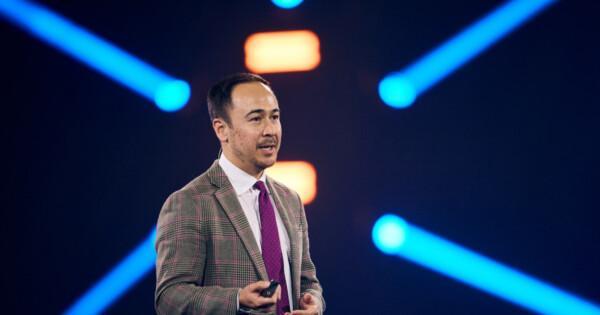
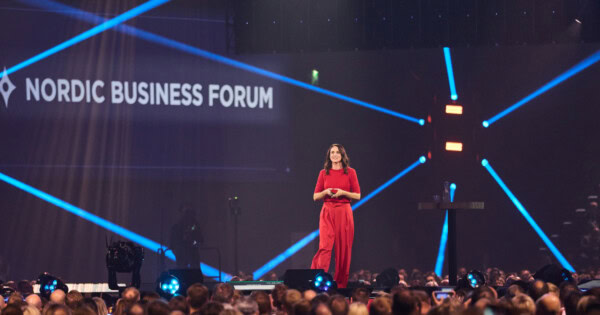
At the Nordic Business Forum 2026 in Helsinki, Swedish economist, associate professor at the Stockholm School of Economics, and bestselling co-author of Funky Business, Kjell A. Nordström, took the stage to explore what these disruptions mean for executive leadership.
His core thesis was clear: the ultimate competitive edge in modern commerce is no longer just the product on the shelf or the digital service you sell. The primary source of sustained advantage is your organizational structure.
The Shift from Head to Heart: Beyond Codified Knowledge
To explain why traditional organizational models are losing their effectiveness, Kjell outlined three primary ways human beings and companies create value: the head (analytical, cognitive, codified work), the hands (physical craftsmanship and manual labor), and the heart (empathy, intuition, and tacit human connection).
For more than a century, the global economy placed enormous emphasis on the head. Universities, professional education, and corporate training were built around analytical and codified knowledge. Today, however, software has evolved to the point where cognitive output can be produced and distributed almost as easily as digital music on Spotify.
“Anything, ladies and gentlemen, that you can express with words or numbers can and will be conquered by these machines,” Kjell observed. “They will do it faster, better than us.”
When explicit, documented knowledge becomes a commodity, what remains uniquely valuable?
Drawing on the pioneering work of Japanese management scholar Ikujiro Nonaka, Kjell emphasized the importance of tacit knowledge: knowledge that is implicit, intuitive, and difficult to put into words. It is the practiced skill of an experienced acupuncturist, the unspoken rapport between teammates, or the commercial instinct that senses when a deal feels right.
“Human beings, all of us, know more than we can say. That we cannot say it does not mean that we don’t know it.”
Because tacit knowledge is difficult to codify and therefore harder for algorithmic tools to reproduce, Kjell argued that future business value will increasingly depend on creating environments where human intuition, judgment, and relationships can flourish.
The Four Waves of Organizational Structure
Throughout history, human organizations adapted their designs whenever external complexity overwhelmed existing frameworks. Kjell mapped this historical progression across four major phases:
1. The Functional Hierarchy
Ever since humans moved out of Africa, collective efforts were organized vertically. A single figurehead sat at the peak, supported by secondary tiers of managers and front-line workers. This centralized organizational structure was ideal for static environments where tomorrow’s tasks were identical to today’s, making it the standard choice for mining operations, churches, and traditional industrial plants.
2. The Multidivisional Form
In 1926, General Motors CEO Alfred P. Sloan realized that a growing, prosperous middle class wanted variety rather than standardized, identical automobiles. Because a monolithic hierarchy could not handle variation, Sloan created distinct operating divisions such as Chevrolet, Pontiac, Buick, and Cadillac within a single corporate parent. This divisional model allowed enterprises to manage product differentiation at scale, powering corporate growth for decades.
3. The Matrix Organization
By the 1960s, initiatives like the Apollo space program required coordinating thousands of external contractors, specialized research labs, and academic institutions. NASA addressed this challenge by developing the matrix organization, overlaying project management teams across functional departments. This framework allowed companies to handle multi-variable complexity, despite the added bureaucratic drag introduced through dual reporting lines.
4. The Heterarchy
Today, organizations face a level of market volatility and technological disruption that rigid hierarchies and matrix frameworks cannot handle. The emerging fourth model is the heterarchy.
A heterarchy is a decentralized, lateral network where authority shifts dynamically based on the project, the context, and the expertise required, rather than staying fixed to a static corporate hierarchy. Coordinated through shared digital platforms, teams operate autonomously, solving problems and disbanding once the objective is met.
The significance of this shift goes beyond organizational efficiency. For Kjell, the way a company organizes itself is increasingly becoming a source of competitive advantage. In a market economy, companies earn healthy margins only when they create a temporary monopoly, a distinct window where their offering is perceived as irreplaceable.
Because competitors can quickly copy products and match pricing, the primary driver of a temporary monopoly is now your organizational structure: a fluid, decentralized company that coordinates tacit knowledge faster than its rivals can reinvent itself repeatedly before competitors even recognize the shift.
The Supermodel Advantage: High Trust and High Tech
What makes this kind of decentralized organization possible? Kjell pointed to the Nordic countries as an example of the conditions that allow heterarchies to function: high levels of social trust combined with widespread technology adoption.
Despite representing just 27 million people, the five Nordic economies consistently appear near the top of global rankings for competitiveness, innovation, and quality of life. Kjell traced that performance to two distinctive cultural traits:
- High Technology Adoption: Nordic populations embrace emerging technologies enthusiastically, integrating digital systems across public and private sectors without hesitation.
- High Social Trust: Nordic societies demonstrate high levels of institutional and interpersonal trust, trusting colleagues, business partners, banks, and public institutions.
Social trust functions as an economic speed multiplier. When trust is embedded across an organization, execution accelerates. Two leaders can meet for coffee, agree on an initiative, and begin execution the next morning without endless legal reviews, protective contracts, or multi-tiered approvals.
“You get shit done fast if there is trust in the system,” Kjell stated.
During the global pandemic, European economies shrank by an average of 6% in GDP, whereas Nordic economies contracted by less than 2%. High social trust and technological fluency allowed businesses to maneuver through uncertainty with agility.
Moving Toward the Collaborative Frontier
The companies that succeed over the next decade will not rely on rigid functional silos. They will organize around responsive, autonomous teams that use artificial intelligence for routine operations while relying on human judgment, creativity, and tacit knowledge for more complex challenges.
For leaders, the task is to build organizations that combine technological capability with the trust and autonomy needed to move quickly, adapt, and preserve human dignity.
As Kjell put it:
“It’s not the product. It’s not the service that you compete with. It’s the organization in itself that will be the competitive advantage now.”
Key points and Questions for Reflection
Key points
- The organization is the competitive advantage: In modern business, products and pricing are easily copied; your internal organizational structure is what creates a sustainable commercial moat.
- Tacit knowledge outperforms explicit knowledge: Explicit data can be streamed and automated by machines; tacit, uncodified human insight remains irreplaceable.
- Hierarchies are evolving into heterarchies: Traditional corporate pyramids are giving way to decentralized, platform-enabled networks that coordinate without rigid vertical management.
- Trust functions as an operational multiplier: High-trust environments make decisions and launch projects rapidly, eliminating bureaucratic friction and administrative delays.
- The Nordic model balances tech with trust: Combining rapid technology adoption with deep social cohesion enables organizations to adapt smoothly during economic shocks.
Questions for Reflection
- Is your current organizational structure designed for routine standardization, or is it flexible enough to operate as a project-based network?
- Which core processes in your enterprise rely on explicit knowledge that autonomous software could soon replicate?
- How does your leadership team identify, capture, and share the unwritten tacit knowledge possessed by your most experienced employees?
- Where does bureaucratic friction, such as excessive sign-offs or rigid approval chains, slow down execution across your teams?
- What deliberate practices can your executive team introduce this quarter to increase internal trust and accelerate decision-making?