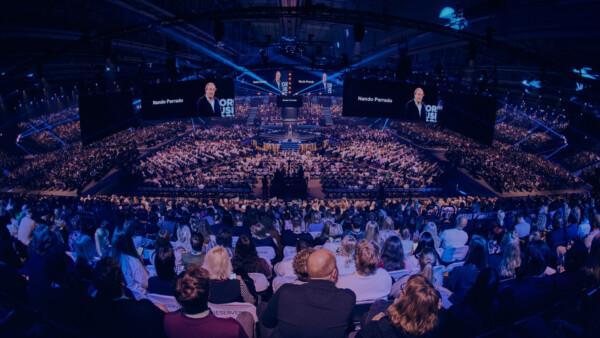
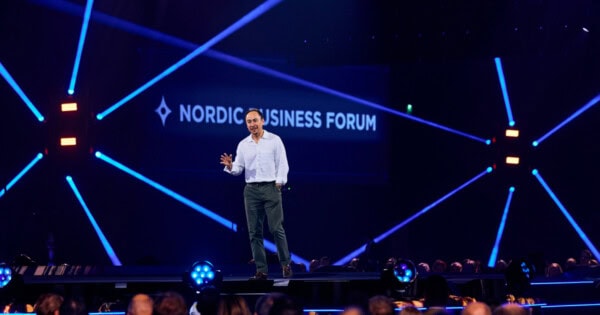
Yesterday’s Executive Summit in Tallinn brought together a group of CEOs to explore a crucial question: how can Europe and its companies remain competitive in this uncertain and constantly changing world?
We heard a keynote by the Founder of the IMD World Competitiveness Centre, Stéphane Garelli and also a presentation by the Deputy Director-General at the European Commission (DG GROW), Maive Rute. Their remarks were followed by an executive dialogue joined by Founder and CEO of Sunly, Priit Lepasepp, and moderated by our co-founder and Business Forum Group CEO Hans-Peter Siefen. The conversation examined competitiveness from multiple perspectives — from European industrial policy and global economic dynamics to leadership, energy, and strategic decision-making.
One key issue came up several times throughout the event: our business environment is no longer moving between periods of stability and disruption. Uncertainty itself has become the operating environment. As Nordic Business Forum CEO Priit Liiv framed it at the beginning of the evening, referencing Peter Hinssen:
“We should be getting used to an environment that is under constant change and uncertainty. That is the new norm, the never normal.”
In that kind of environment, competitiveness is no longer only about efficiency. It is increasingly about adaptability, resilience, and the ability to make decisions under pressure.
Maive Rute: Europe’s Competitiveness Must Be Rebuilt
Maive Rute, Deputy Director-General at the European Commission (DG GROW), opened the evening by addressing Europe’s growing competitiveness challenge directly. Her keynote focused on the structural issues Europe faces today: fragmented markets, underinvestment, supply chain vulnerabilities, and the need for a stronger, faster industrial strategy.
While Europe still possesses enormous strengths in talent, innovation, and industrial capability, Maive argued that the global competitive landscape has changed dramatically. Today’s industrial competition is increasingly shaped by state-backed investments, scale, and speed.
She illustrated this with a striking comparison: government subsidies for large manufacturing firms in China amount to nearly 3% of company revenue, while support levels in OECD Europe remain closer to 0.35%. As a result, China has built a dominant position across several clean energy technologies, including electric vehicles, solar power, wind energy, and heat pumps.
Europe also risks falling behind in future growth markets. In areas such as autonomous driving and robotaxis – the industries expected to generate hundreds of billions in value over the next decade – American and Chinese companies have already established an early lead.
For Maive, the answer is not pessimism, but action. Europe must rethink how it supports innovation, accelerates industrial projects, and strengthens strategic resilience.
She pointed to several concrete initiatives already underway. Under the EU’s Critical Raw Materials Act, permitting timelines for strategic projects are being significantly shortened to help secure supply chains faster. At the same time, Europe is mobilizing major investments into batteries, hydrogen, and microelectronics through large-scale public-private funding programs expected to unlock tens of billions of euros in additional private investment.
Throughout her keynote, Maive emphasized the importance of collaboration across industries and borders:
“We can bring people together, we can create links between member states, and we can create the basis for new supply chains.”
For leaders in the audience, the message was clear: European competitiveness will not be restored by returning to previous economic models. It requires faster execution, stronger collaboration, strategic investments, and the courage to rethink long-standing assumptions.
Stéphane Garelli: The Rules of Competitiveness Have Changed
Where Maive Rute focused on Europe’s institutional and industrial response, Stéphane Garelli zoomed out to examine the broader transformation reshaping the global economy. At the center of his keynote was a simple but powerful idea:
“The real difficulty lies not in developing new ideas, but actually in escaping from the old ones.”
Referencing John Maynard Keynes, Stéphane argued that today’s challenge is not a lack of innovation. Instead, organizations struggle to let go of the assumptions that shaped business success during decades of globalization, cost optimization, and relative stability.
According to Stéphane, that world no longer exists. While the global economy remains deeply interconnected, the rules shaping it have become increasingly fragmented and political.
He illustrated this fractured reality through several examples:
- Global trade is increasingly vulnerable. Around 80% of world trade volume still moves by sea, with enormous dependence on a handful of maritime chokepoints. More than 20% of global maritime trade passes through both the Malacca Strait and the Taiwan Strait, exposing supply chains to growing geopolitical risks.
- Tariffs have become geopolitical tools. Stéphane noted that tariffs are no longer only about economics or protecting jobs, but increasingly tied to national security and strategic competition. In practice, much of the financial burden ultimately falls on consumers.
- China is scaling at extraordinary speed. China now accounts for roughly 50% of the world’s installed solar energy capacity and continues expanding its manufacturing dominance in electric vehicles, batteries, and clean energy technologies. Its domestic electricity production is already estimated to be around 2.5 times larger than that of the United States.
- AI is reshaping infrastructure demand. The rapid growth in the adoption of AI is dramatically increasing demand for electricity, data infrastructure, and water resources. Stéphane highlighted that a single AI query consumes 10 to 100 times more energy than a traditional web search, while large-scale data centers already require enormous amounts of electricity and water to operate.
For Stéphane, these developments signal that leaders can no longer rely on old frameworks to explain the world around them. Europe risks falling behind if it cannot reduce internal fragmentation, simplify overly complex systems, and accelerate innovation.
Despite the challenges, Stéphane resisted overly pessimistic narratives. Smaller countries and agile organizations can still compete successfully, he argued, if they remain adaptable, move faster than larger bureaucratic systems, and maintain excellence in execution.
His keynote ultimately became a call for realism rather than nostalgia. Stability is unlikely to return in the form many leaders remember. Instead of waiting for certainty, organizations must build the capability to operate and compete amid continuous disruption.
Executive Dialogue: Leadership, Energy, and Strategic Readiness
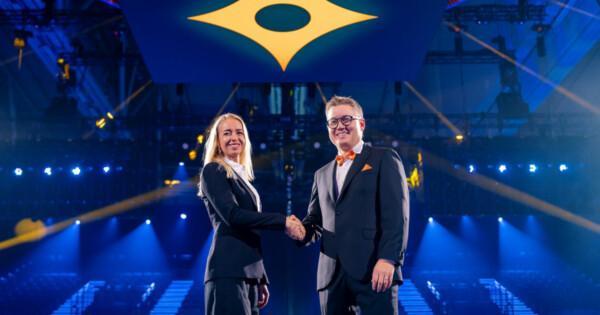
The evening concluded with an executive dialogue featuring Stéphane Garelli, Maive Rute, and Priit Lepasepp, moderated by Hans-Peter Siefen. The discussion brought the macroeconomic themes of the evening closer to practical leadership realities.
A recurring topic throughout the conversation was energy; not only as a sustainability question, but increasingly as a competitiveness issue. Europe’s ability to secure affordable, resilient, and scalable energy systems was discussed as one of the defining strategic challenges for the coming decade.
The conversation also focused heavily on leadership under uncertainty. The panel explored how organizations can continue making strategic decisions when geopolitical conditions, technologies, and markets shift faster than traditional planning cycles can keep up with.
Rather than treating uncertainty as a temporary disruption, the speakers emphasized the importance of building organizations that are structurally capable of adapting continuously.
Another important theme was speed. In increasingly volatile environments, organizations that can make decisions faster, experiment faster, and learn faster gain significant competitive advantages over those that remain slowed down by excessive complexity or internal hesitation. Throughout the discussion, competitiveness emerged not only as an economic concept, but as a leadership capability.
What Competitiveness Demands from Leaders Now
As the discussions in Tallinn made clear, the future of competitiveness will be shaped not by stability, but by how leaders respond when stability no longer exists.
Across the evening’s keynotes and discussions, one message became increasingly clear: the organizations that succeed in the coming years will not necessarily be the largest, the oldest, or even the most resource-rich. They will be the ones capable of adapting faster, collaborating better, and making decisions despite uncertainty.
The executive dialogue highlighted that competitiveness today extends far beyond operational efficiency. It’s increasingly tied to resilience, energy security, innovation capacity, strategic investments, and leadership culture. In a world shaped by geopolitical shifts, fragmented markets, technological acceleration, and constant disruption, leaders can no longer afford to wait for clarity before acting. To survive, companies must establish a new model anchored in pricing power, supplier diversification, and extreme agility. As Stéphane underscored by referencing the leadership legacy of Lee Kuan Yew:
“The man who insists on perfect clearness before he decides… never decides!”
At the same time, the discussions also carried a sense of optimism. Europe still holds significant strengths: deep industrial expertise, strong institutions, world-class talent, and the ability to build trusted partnerships across borders. But unlocking that potential requires courage: the courage to challenge outdated assumptions, rethink old operating models, and move faster when circumstances demand it.
For leaders reflecting on the evening’s insights, a few practical questions stand out:
- How quickly can your organization adapt when the environment changes unexpectedly?
- Are your decision-making structures enabling speed or slowing it down?
- Where does your business depend too heavily on stability that may no longer return?
- How are you strengthening resilience across supply chains, partnerships, talent, and energy usage?
- Are you building an organization capable not only of surviving uncertainty, but competing through it?
In the years ahead, competitiveness may increasingly belong to organizations that can stay clear-headed amid complexity, act before certainty exists, and continuously evolve while others hesitate.