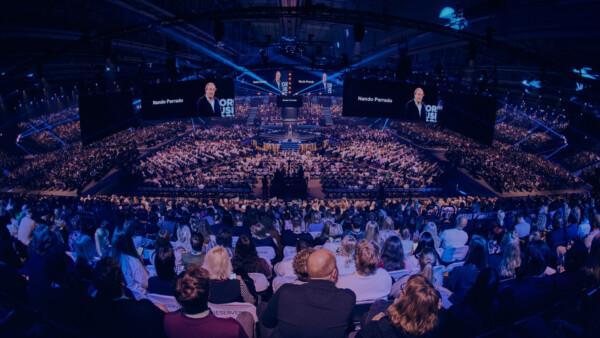
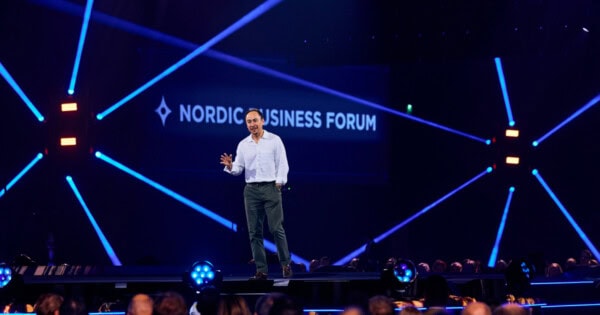
Entrepreneur and innovation expert Diana Kander didn’t walk on stage to talk about disruption or digital trends. She came to talk about something far more personal and more dangerous to innovation than most leaders realize: success.
With sharp humor, candid stories, and a flair for the unexpected, Diana challenged the audience at Nordic Business Forum 2025 to think differently about how they grow: the habits that once made you successful may now be holding you back.
From zombie projects to blank-page thinking and building pit crews for progress, Diana laid out a roadmap for anyone ready to trade expertise for reinvention.
Are You Innovating Like Snoop Dogg, or like Vanilla Ice?
Diana opened her keynote with an unexpected comparison. On one side: Snoop Dogg, a rapper turned investor, videogame producer, cereal mogul, NFT creator, dog apparel designer, and metaverse real estate tycoon. On the other: Vanilla Ice, still doing the same act he was doing 30 years ago.
The contrast was sharp and funny, but the lesson was serious: when you stop reinventing, you start becoming irrelevant. “How fast are you growing and innovating on a scale of Vanilla Ice to Snoop Dogg?” she questioned the audience.
For Diana, curiosity isn’t just a trait. It’s a competitive strategy. And the biggest barrier to it? Not failure, not lack of resources, but success.
“Once we find a way that works, once we gain expertise in our business, we shut down to possible ways of doing it better.”
Step 1: Kill the Zombies
Diana’s first step to reclaiming curiosity is to identify what she calls “zombies”: projects, meetings, and tasks that consume time and effort without creating real value.
“Zombies are a natural byproduct of success. Like stepping on Legos is a natural byproduct of having children,” she said. And just as parents occasionally need to clear the carpet, leaders also need to clean up when it comes to zombies.
Most of us, she argued, are too busy being productive to notice that some of what we do no longer makes sense. A once-great idea may now be holding back innovation. She challenged leaders to take an honest look and ask not just, “What should we do?” but also, “What should we stop?”
She even pointed to Jeff Bezos as a role model, not for his success, but for his willingness to shut down dozens of Amazon initiatives that were “good, but not good enough.”
When our zombies are no longer alive, better projects, ideas, and tasks start to thrive.
Step 2: Reimagine From Scratch
Too often, experts ask how to improve what exists. Innovators ask what version 2.0 looks like. They start with a blank sheet and imagine what’s possible.
Diana told the story of how she went from $77K in revenue to $870K in one year. It was not by working harder, but by throwing out her previous model and starting fresh with a blank sheet of paper. Her advice: don’t let old wins define your future.
“Everything that worked for me the first year was also keeping me from becoming what I was capable of.”
To inspire this mindset, she returned to Snoop Dogg again, this time, in an interview speaking as a would-be National Hockey League team owner. “He’s not saying, ‘How do we increase concessions by 5%?’ He’s saying, ‘How do we rebrand the whole league?’ That’s the difference,” Diana pointed out.
Step 3: Build a Pit Crew
One of the most moving parts of Diana’s keynote was her story about “never goaling alone.” She explained how true growth and innovation rarely happen in isolation. They require outside perspectives, and sometimes, unexpected partnerships.
She shared the example of a UK children’s hospital that dramatically improved surgical recovery outcomes by inviting a Formula 1 pit crew to observe and advise on their ICU handoff process. The pit crew put together a report, and they handed it back to the experts, who addressed all of the issues, reduced errors by 66%, and saved countless lives.
Diana strongly recommended that when creating a to-do list for achieving a big, ambitious goal or solving a major problem, we shouldn’t begin with tasks to complete, but with people to talk to.
“You are inside a box created from your previous successes and expertise. You literally need another person to pull you out of the box.”
Innovation Is Personal
Throughout her keynote, Diana showed that innovation isn’t just about product design or strategic pivots. It’s about how we show up in our lives. She applies the same curiosity principles on her birthday each year by treating herself as version 4.4, 4.5, and so on: identifying new skills, habits, and mindsets she wants to adopt.
She even hired a beauty pageant consultant to improve how she walks on stage.
“There are so many things that we think, as leaders, we’re already great at. But it’s not until we create the space that growth begins.”
In closing, she left the audience with a striking visual: a grainy black-and-white vault routine that won Olympic gold in 1956, followed by Simone Biles in full flight. An obvious upgrade. But Diana warned against complacency:
“The danger is that we look at Simone Biles and think, well, this is it. How much better can it get?” she said. “But what if someone in 30 years looks back at today and says, ‘Can you believe that passed for gold?’”

Key Points and Questions for Reflection
Key Points
- Past success is the biggest threat to future growth.
- Zombies, or activities that take more than they give, must be identified and stopped.
- Innovation requires space, often created by letting go of what’s merely “good.”
- Your network matters. A strong “pit crew” helps you see beyond your own blind spots.
- Curiosity isn’t automatic. It must be protected, practiced, and prioritized.
Questions for Reflection
- What are the “zombie” projects or habits in your business that need to go?
- If you started your process or product today from scratch, what would look different?
- Who’s in your pit crew, and who’s missing?
- What are you holding onto simply because it worked once?
- On a scale of 1 to 10, where are you today compared to what you’re capable of?